
What are the Options for Online and Remote Treatment?
- Addiction rehab treatment centre in Spain
Online counselling, telepsychiatry, e-health and remote therapy are all terms which refer to the practice of conducting therapeutic sessions with a patient via a telephone, mobile, the internet or another form of electronic media, instead of traditional face to face counselling.
With ever evolving and improving communication networks combined with a society where technology is intrinsic in everyday life - smartphones, laptops, tablets are the norm for most adults, and children often have an online presence by their early teens – the move to online therapy is not a surprise.
Online counselling is not however a new concept, as early as 1972 UCLA & Stanford universities were investigating using computers in therapy.
In the 80’s a university in the USA created an online therapy program for their students and the Samaritans launched their suicide prevention email service during the mid to late 90’s.
Some of the advantages to online counselling and/or therapy include -
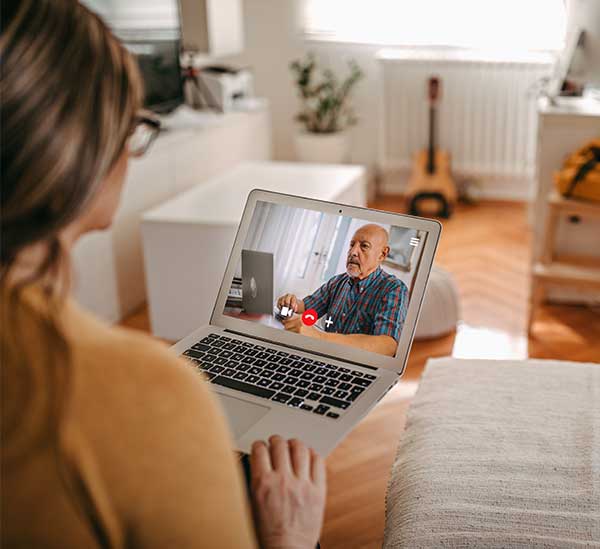
It is available to all by taking away the necessity to go to an office or surgery it increases the accessibility for everyone. People with transportation, illness or mobility issues can use the services from the comfort of their homes.
Clients struggling with certain anxiety disorders, especially social anxiety, or agoraphobia, find it much easier to engage with a therapist online. Individuals can schedule sessions around other commitments, such as family, work or studying making it more convenient for many people.
In most cases the online version of a therapy service costs less than the same treatment face to face.
There is a greater element of anonymity online - some online therapy sites allow users to sign up with usernames or tags rather than their full name – this can be appealing to individuals with trust or privacy issues. Some people wish to, or need to, keep their attendance at therapy private and for them it also takes away the potential problem of bumping into friends, colleagues, or acquaintances in the waiting room or outside a known therapist’s office.
It can be easier to some individuals to share private or intimate details online rather than in person.
As with anything, there are some who online therapy will not work for, or they just don’t like the idea. Individuals who want or require being taken out of the environment they are in. Some people enjoy the physical act of going to a session or into a treatment centre and being closeted away from the outside world, and some need the human interaction and contact.
Nowadays there are many different options for treatment available, for many debilitating conditions and disorders – online therapy courses, one-to- one counselling, group therapy, day care programs and residential rehab to name a few and this means if you need, or want, support - whatever your problem is, big or small there is a solution out there to fit your needs and help you.
If you think that you or someone you love might have a problem with drug or alcohol addiction, compulsive behaviour or emotional disorders, reach out and speak to our specialist addiction rehab treatment team on our confidential helpline +34 691 881 422. Immediate admission available.

Our Alcohol and Drug Exclusive Treatment Options
Finding the right recovery path can be overwhelming, but we're here to guide you. From cost-free support options to luxury treatments, we provide a range of choices tailored to your needs and budget. With compassionate expertise,
...

The Mind’s Negative Bias, Gratitude and Recovery
Our minds are wired to spot danger, but in addiction this protective instinct can turn against us, fuelling anxiety, catastrophising and the urge to escape through alcohol. We explore how learning to sit with uncertainty and practising daily gratitud...
Our Top 5 Inspiring Addiction Recovery Shows on Netflix
Addiction recovery movies and series are a great way to relax and celebrate being in recovery, or inspire you to take action to deal with your addiction. Here are our top 5 recovery shows on Netflix today, and why you should watch them.
...

Facing the Family Sober: How to Cope Over Christmas
Christmas isn’t always family fun - for many, it involves feuds and separations, keeping the peace, or difficult relatives. Yet there are lots of things you can do to stay sane and sober and reduce the risks for addicts and alcoholics.
...

Freedom from Cocaine Addiction: Private Treatment in Marbella
Cocaine can begin as part of a social working life and slowly become something used alone, during the day, and eventually in the morning. This article looks at how that happens, the facts behind the risks, and the private support available at Phoenix...

Phoenix Executive Programmes: a client’s story
Accepting I needed help with my drinking was not difficult; my relationships had grown increasingly strained, my performance at work was suffering and a recent company medical had shown the early signs of alcohol damage.
...

How Alcoholics Anonymous Builds Character Beyond Sobriety
Many people believe Alcoholics Anonymous is simply about stopping drinking. In reality, sobriety is only the beginning. The Twelve Steps offer an opportunity to build character, find purpose and create a life that no longer needs to be escaped from i...

How Can I Control my Drinking at Christmas Parties?
Are you worried about drinking too much at the office party or overdoing the celebrations with your friends? Find out how to enjoy yourself without getting drunk over Christmas, and how to spot when your drinking is out of control.
...

