
Alcoholic Amnesia: What Blackouts Really Mean in Reality
- Mental Health and Addiction Treatment Centre
Alcoholic amnesia, more commonly known as an alcohol blackout, is widely misunderstood. Many people assume it simply means forgetting what happened later, or that it only occurs when someone is unconscious, passed out, or visibly out of control.
In reality, blackouts are a neurological event (a form of alcohol-induced anterograde amnesia). Understanding what they really mean can be a turning point for anyone concerned about their drinking, or worried about a partner, friend, or family member.
In reality, blackouts are a neurological event (a form of alcohol-induced anterograde amnesia). Understanding what they really mean can be a turning point for anyone concerned about their drinking, or worried about a partner, friend, or family member.
Alcoholic Amnesia Is Not About Forgetting
A blackout is not a failure of recall, It is a failure of memory formation.
When a blackout occurs, the brain does not reliably store experiences as long-term memories in the first place.
This means there is often nothing to retrieve later, no matter how hard someone tries to remember, and no amount of “trying to recall” will fill in the gap.
This is why people often say, “I don’t remember anything after that point.”

Not because they are repressing it, not because they are in denial. But because those memories were never properly recorded.
What Happens In The Brain During A Blackout
Memory formation relies heavily on a part of the brain called the hippocampus. Its role is to take experiences, sights, sounds, conversations, emotions, and convert them into stable long-term memory.
When large amounts of alcohol are consumed, alcohol disrupts normal brain signalling. Crucially, blackouts are linked to how quickly blood alcohol concentration rises, not just how much is consumed. At high levels (especially with fast drinking, drinking games, empty stomach drinking, or mixing alcohol with other drugs), this disruption interferes with the hippocampus’s ability to encode and consolidate new memories.
The result is simple but serious:
Experiences continue
Behaviour continues
Consciousness continues
But memory recording stops
The brain is still active, just without a working “save” function. People can talk, walk, argue, flirt, make decisions, and even appear normal, but the experience is not being stored. Some people have partial blackouts (sometimes called “grayouts”), while others experience complete blank periods.
The Brain In Survival Mode
One way to understand this is to think of the brain as a highly advanced system constantly processing vast amounts of information: movement, balance, speech, emotion, vision, sound, and internal signals.
When alcohol overwhelms the system, the brain shifts priorities. In effect, it stops allocating resources to memory formation and focuses instead on keeping the body functioning: breathing, heart rate, balance, temperature regulation, and basic motor control.
Memory is not essential for survival in that moment.
Breathing is.
So memory shuts down, not because the person is unconscious, but because the brain’s memory systems are temporarily offline under alcohol, even while other abilities can appear to keep going.
What This Looks Like in Real Life
This is where blackouts become so confusing for the person drinking excessively and for the people around them.
At a party or social event, the person may appear awake, articulate, sociable, confident, and engaged. They may be talking, laughing, moving easily through the room, and even described as the life and soul of the party. From the outside, nothing looks obviously wrong.
And yet, internally, the brain is no longer reliably recording what is happening. Conversations, interactions, and decisions are passing through consciousness without being stored, which is why the next day can feel like a missing section of film with no reliable way to reconstruct it.
The morning after the next day, there is often a vague sense of having been out the night before, but with a growing awareness that there are missing hours.
You may remember getting ready
You may remember arriving
And then, nothing.
The rest of the evening is blank
At first there is confusion. Then the questions start to surface, often alongside dread or shame.
What did I say?
Who did I talk to?
How did I get home?
Did I offend anyone?
Did I do something I’ll regret?
People often check their phone for clues, messages, calls, photos, receipts, location history anything that might help reconstruct the missing hours.
With that uncertainty comes fear. Not because something bad is remembered, but because it cannot be ruled out, and because blackouts remove the usual sense of control and continuity.
For many, this loss of certainty is deeply unsettling and distressing, especially if trust, safety, consent, or personal safety could have been compromised.
LEADING ALCOHOL ADDICTION TREATMENT CENTRE
Private, personalised treatment for alcohol and behavioural addictions in Spain
Why This Matters in Treatment and Prevention
Blackouts are often dismissed as embarrassing, inconvenient, or simply “part of heavy drinking.” In reality, they are a sign that alcohol has pushed the brain beyond a safety threshold.
Once memory formation is impaired, the brain also loses its ability to pause, reflect, and adjust behaviour in real time. Learning stops. Internal warning signals are dulled. Risk assessment drops. Actions are less guided by consequence, which is why people may drive, disappear, argue, spend money, or take sexual risks with no memory afterwards.
This is why repeated blackouts are not a trivial warning sign and why asking “are alcohol blackouts dangerous?” is the right question.
They indicate that the brain is being repeatedly overwhelmed, and that the systems responsible for judgement, regulation, and self-control are no longer functioning reliably under alcohol.
Left unaddressed, this pattern marks an escalating risk: accidents and injury, conflict and relationship damage, risky sex, financial harm, legal trouble, and a deeper slide into dependence.
A Critical Point to Understand
Blackouts are not a diagnosis. They do not define a person, their character, or their future — but they do deserve attention.
They are a clear signal that alcohol use has crossed into dangerous territory, where the brain is no longer fully protecting itself.
The good news, and the opportunity. Understanding alcoholic blackouts: an early warning sign you can act on.
The good news is that blackouts are often one of the earliest signs to resolve when drinking stops and they are often one of the earliest opportunities to intervene. Experiencing blackouts is an early warning sign of excessive or harmful alcohol use. If this warning is recognised and acted upon, it can become a powerful wake-up call rather than a source of fear or shame.
It clearly signals that alcohol consumption has crossed a line, but also that there is still an opportunity to intervene early. At this stage, patterns of alcohol misuse can be addressed, reversed, and brought back under control with the right support, often before the wider damage is done.
Recognising this now allows action to be taken before the consequences become more severe, and before blackouts become “normal.”
If you are experiencing blackouts, or are concerned about your drinking, this may be the right time to talk to someone privately, without judgement, and with a clear plan.
Early support can make all the difference.
If you think that you or someone you love might have a problem with drug or alcohol addiction, compulsive behaviour or emotional disorders, reach out and speak to our specialist addiction rehab treatment team on our confidential helpline +34 691 881 422. Immediate admission available.

Lockdown life, did your drinking get out of control?
Lockdown was a stressful, anxious, lonely, and sometimes even downright dull, time for many. On top of the isolation many needed to assume the extra or sole responsibility for tasks such as home schooling or housekeeping.
...

The Addictive Pursuit of More: Why We’re Never Satisfied
Human beings have always been seekers. From the earliest cave dwellers who searched for fire, food, and shelter, to modern individuals chasing wealth, status, and experiences, the innate drive to attain more .
...
Crying for the Moon, What It Really Meant in My Drinking Days
The Daily Reflections crying for the moon, captures something I now recognise as central to my alcoholism: a persistent, restless desire for emotional satisfaction that life simply cannot sustain. It was not ambition. It was not healthy striving.
...

10 Years on! Two amazing rehab success stories
Two amazing success stories from former clients celebrating being 10 years sober this week. We are so happy and so pleased that here at the rehab centre we were able to be a part of their incredible recovery journey.
...

Why Are Teenage Brains More Vulnerable To Addiction?
Differences between youth and adult brains put young people at greater risk of addiction, mental illness and other harms, with the damage lasting their whole lives. We explain why, and some steps to protect youngsters from the dangers.
...
What can I do if I can’t afford Residential Rehab?
My problem drinking had been affecting my life for many years. I had tried rehab previously and it worked for a short while. Then I secretly started using drugs instead. I was hiding it from all my friends and family.
...
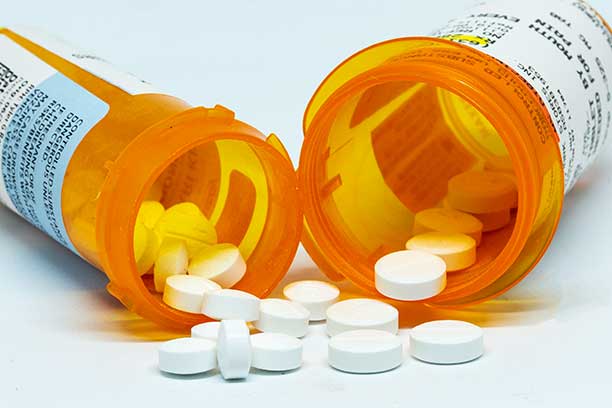
Addicted to Prescription Drugs such as Morphine and Tramadol
When most people think of a drug addiction, we think of the heroin addict, cocaine user or the pot head smoking marijuana. But recent years have also seen a leap in the number of people abusing prescription drugs.
...

Rehab in Europe - What to look for when travelling for treatment
When people start looking at alcohol or addiction treatment options the appeal to get away from their day-to-day life is strong – away from all the chaos and drama that often ensues towards the end of a person’s drinking and using.
...

